



Appointment secured on merit cannot be invalidated for an unintentional category error in a qualifying certificate if no undue advantage accrued therefrom.
2025 INSC 586 SUPREME COURT OF INDIA DIVISION BENCH SHYAM NANDAN MEHTA Vs. SANTOSH KUMAR AND OTHERS ( Before : Dipankar Datta and Prashant Kumar Mishra, JJ. ) Civil Appeal…
Under Sections 34/37 of Arbitration Act, 1996, courts lack power to modify awards but can set aside, partially set aside (sever) severable parts, or correct computational/clerical errors.
2025 INSC 605 SUPREME COURT OF INDIA 5 JUDGES BENCH GAYATRI BALASAMY Vs. M/S. ISG NOVASOFT TECHNOLOGIES LIMITED ( Before : Sanjiv Khanna, CJI., B.R. Gavai, Sanjay Kumar, Augustine George…
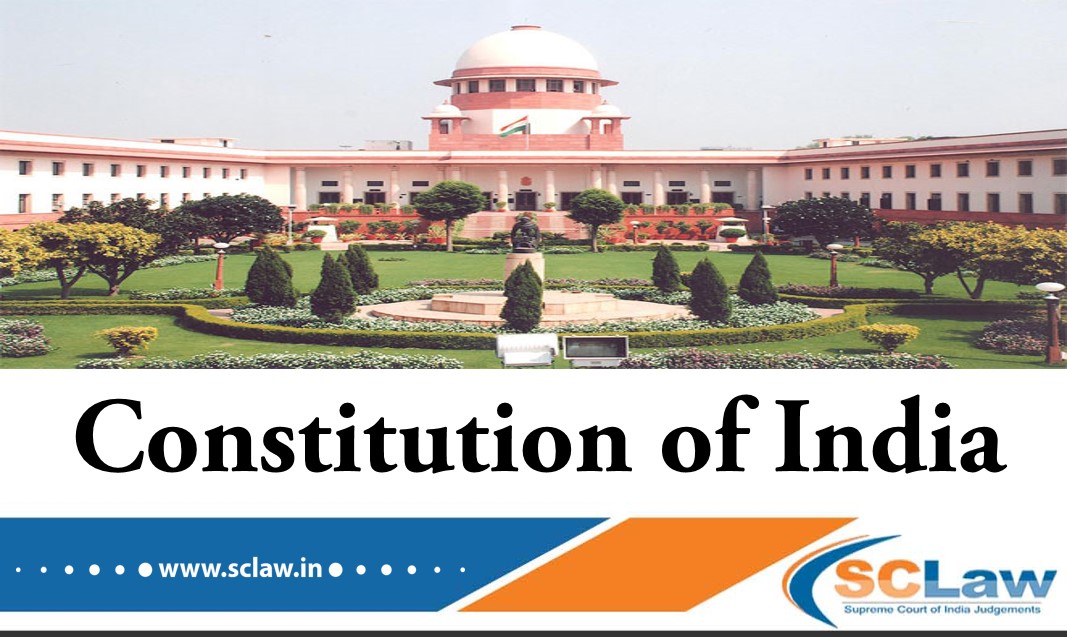
Courts must strictly enforce building laws, order demolition of unauthorized structures, and refuse regularization pleas from violators, upholding the rule of law.
2025 INSC 610 SUPREME COURT OF INDIA DIVISION BENCH KANIZ AHMED Vs. SABUDDIN AND OTHERS ( Before : J.B. Pardiwala and R. Mahadevan, JJ. ) Petition for Special Leave to…
The Right to Life (Art 21) includes digital access; inaccessible digital KYC processes violate this and the RPwD Act, mandating regulators ensure accessible alternatives and reasonable accommodation.
2025 INSC 599 SUPREME COURT OF INDIA DIVISION BENCH PRAGYA PRASUN AND OTHERS Vs. UNION OF INDIA AND OTHERS ( Before : J.B. Pardiwala and R. Mahadevan, JJ. ) Writ…
An Arbitral Tribunal possesses the power under Section 16, Arbitration Act, 1996, based on consent principles in Sections 2(1)(h) & 7, to implead non-signatories bound by arbitration agreement.
2025 INSC 616 SUPREME COURT OF INDIA DIVISION BENCH ASF BUILDTECH PRIVATE LIMITED Vs. SHAPOORJI PALLONJI AND COMPANY PRIVATE LIMITED ( Before : J.B. Pardiwala and R. Mahadevan, JJ. )…
Refund of earnest/advance money requires specific pleading under S. 22(2) Specific Relief Act, even if specific performance is refused; forfeiture of earnest money is generally permissible upon purchaser’s default. Shree Hanuman Cotton Mills v. Tata Air Craft Ltd., (1969) 3 SCC 522 — Principles reiterated.; Videocon Properties Ltd. v. Bhalchandra Laboratories, (2004) 3 SCC 711 — Followed. ; Satish Batra v. Sudhir Rawal, (2013) 1 SCC 345 — Followed and applied. ; Central Bank of India v. Shanmugavelu, (2024) 6 SCC 641 — Followed.; Fateh Chand v. Balkishan Dass, 1963 SCC OnLine SC 49 — Distinguished regarding earnest money; Applied regarding penalty.; Maula Bux v. Union of India, (1969) 2 SCC 554 — Distinguished regarding earnest money; Applied regarding penalty.; Kailash Nath Associates v. DDA, (2015) 4 SCC 136 — Considered and distinguished on facts.; Godrej Projects Development Ltd. v. Anil Karlekar, 2025 SCC OnLine SC 222 — Cited.
2025 INSC 617 SUPREME COURT OF INDIA DIVISION BENCH K.R. SURESH Vs. R. POORNIMA AND OTHERS ( Before : J.B. Pardiwala and R. Mahadevan, JJ. ) Civil Appeal No. 5822…
Licensed stamp vendors are ‘public servants’ under PC Act, 1988, as they are remunerated (via discount) for performing a public duty; however, conviction requires proof of demand beyond reasonable doubt.
2025 INSC 618 SUPREME COURT OF INDIA DIVISION BENCH AMAN BHATIA Vs. STATE (GNCT OF DELHI) ( Before : J.B. Pardiwala and R. Mahadevan, JJ. ) Criminal Appeal No. 2613…
Denial of promotion consideration based on an already set-aside punishment is illegal; employee entitled to retrospective consideration, promotion, and benefits if found eligible.
2025 INSC 620 SUPREME COURT OF INDIA DIVISION BENCH P. SAKTHI Vs. THE GOVERNMENT OF TAMIL NADU AND OTHERS ( Before : Sudhanshu Dhulia and K. Vinod Chandran, JJ. )…
Fabrication and use of forged High Court orders is gross criminal contempt; suo motu contempt initiation occurs upon Court’s cognizance, not formal notice issuance, for Section 20 limitation.
2025 INSC 619 SUPREME COURT OF INDIA DIVISION BENCH SHANMUGAM @ LAKSHMINARAYANAN Vs. HIGH COURT OF MADRAS ( Before : Sudhanshu Dhulia and Prashant Kumar Mishra, JJ. ) Criminal Appeal…

Resolution plan approval vitiated by RP/CoC’s failure to comply with mandatory IBC provisions/timelines and SRA’s misuse of process, leading to plan rejection and mandatory liquidation.
2025 INSC 621 SUPREME COURT OF INDIA DIVISION BENCH KALYANI TRANSCO Vs. M/S.BHUSHAN POWER AND STEEL LTD. AND OTHERS ( Before : Bela M. Trivedi and Satish Chandra Sharma, JJ.…